Master essential Forex trading terms to navigate the 2026 market. We break down these foundational concepts so you can start trading with confidence.

Forex Trading Terms: Your 2026 Guide for Beginners
Forex, also known as foreign exchange, is the trading of different currencies between two parties. It is a global market that operates 24 hours a day, with most of the trading occurring in London, New York, Tokyo and Hong Kong. Forex Trading Terms.
The primary currency traded in forex is the US dollar (USD), which serves as the base currency for most transactions. Its a popular method of investing in international markets for experienced and novice traders.
But, to get started in forex trading on the right footing, one must first understand the foundational concepts and terms used.
Key Takeaways
- Core Concepts are Crucial: Understanding terms like Currency Pair, Pip, and Spread is essential for calculating costs and potential profits.
- Leverage is a Double-Edged Sword: While it amplifies gains, leverage also magnifies losses. Real-world experience shows that starting with low leverage is key to survival.
- Analysis is Your Roadmap: Technical analysis uses chart patterns and indicators to forecast price moves, while fundamental analysis looks at economic data. Successful traders often blend both.
- Risk Management is Non-Negotiable: Tools like Stop Loss orders are your primary defense against significant losses. Placing them based on market structure, not arbitrary percentages, is a professional approach.
- The Market Evolves: Terms like “Prop Firms” and “Liquidity Sweeps” are becoming more common. Understanding them keeps you ahead of the curve.

Forex Terms 2026: Quick Summary Table
| Foundation | Trending | Core | Market Analysis |
|---|---|---|---|
| Forex (FX) | Prop Firm | Leverage | Technical Analysis |
| Currency Pair | Liquidity Sweep | Margin | Fundamental Analysis |
| Base Currency | Algo Trading | Long/Short | Support/Resistance |
| Quote Currency | Copy Trading | Stop Loss | Moving Average |
| Major Pairs | RegTech | Take Profit | RSI |
| Cross Pair | DeFi FX | Lot | MACD |
| Exotics | Funding Rate | Chart Patterns | |
| Pip | Virtual IB | Volume | |
| Pipette | Deep Liquidity | Trend | |
| Price Tick | Flash Crash | Volatility | |
| Bid | |||
| Ask (Offer) | |||
| Spread | |||
| Lot | |||
| Liquidity | |||
| Volatility |
Basic Forex Terms You Should Know
Language shapes how we trade, analyze risk, and spot opportunity. Mastering Forex terms is more than memorizing definitions it’s about understanding how the market moves and how traders make decisions day in and day out.

Why this glossary matters:
- Get instant clarity on the terms you’ll see and hear every day.
- Build the confidence to have real conversations with brokers and traders.
- Lay the foundation for strategies, risk management, and smart execution.
- Whether you’re a new trader or sharpening your expertise, these definitions will help you speak the true language of Forex and make informed moves in a fast-moving market.

Foundational Forex Terms
Before you trade, master these building blocks. These are the key Forex terms every trader sees and uses daily:
- Forex (FX) – Global marketplace for exchanging currencies, traded in pairs 24/5.
- Currency Pair – Two currencies quoted together: buy the base, sell the quote. Example: EUR/USD.
- Base Currency – First in the pair. The unit you buy or sell (e.g., EUR in EUR/USD).
- Quote Currency – Second in the pair. The money you pay or receive (e.g., USD in EUR/USD).
- Major Pairs – Currency pairs with USD and high liquidity (e.g., EUR/USD).
- Cross Pair – Pair without USD (e.g., EUR/GBP).
- Exotics – Major versus an emerging currency, with less liquidity and wider spreads (e.g., USD/TRY).
- Pip – Smallest standard price move, usually 0.0001 (or 0.01 for JPY pairs).
- Pipette – Fractional pip for extra precision, equal to one-tenth of a pip (0.00001).
- Price Tick – Platform-reported minimum price change.
- Bid – Price at which the market buys from you (what you sell for).
- Ask (Offer) – Price at which the market sells to you (what you buy for).
- Spread – Ask minus Bid; your built-in transaction cost. Lower spread = lower cost.
- Lot – Standard trade size:
- Standard Lot: 100,000 units of base currency
- Mini Lot: 10,000 units
- Micro Lot: 1,000 units
- Liquidity – Ability to buy/sell large amounts with minimal price impact.
- Volatility – Speed and magnitude of price movements; higher means bigger swings.
- Trend – Lasting price direction (uptrend or downtrend).
- Range – Sideways trading between clear support and resistance.
These terms are your day-to-day toolkit. Knowing them will help you follow conversations with brokers, understand quotes, and make the right moves in the Forex market.

Core Trading Concepts Explained
Every trader must first grasp the basic concepts and definitions to build a solid foundation for successful trading.
Currency Pair
A currency pair is the quotation of two different currencies, with the value of one currency being quoted against the other. In the Forex market, you always buy one currency while simultaneously selling another. For example, in the EUR/USD pair, you are trading the Euro against the US Dollar.
Base and Quote Currency
Within a currency pair, the first currency is the base currency, and the second is the quote currency.
- Base Currency: The primary currency in the transaction. It’s the currency you are buying or selling. In EUR/USD, the Euro is the base currency.
- Quote Currency: The currency used to value the base currency. In EUR/USD, the US Dollar is the quote currency. If the price is 1.07, it means 1 Euro costs 1.07 US Dollars.
Pip and Pipette
- Pip: A “pip,” or “percentage in point,” is the smallest standard price move a currency pair can make. For most pairs, a pip is equivalent to a 0.0001 change in the exchange rate. For instance, if the EUR/USD moves from 1.0700 to 1.0701, that is a one-pip move.
- Pipette: A pipette is a fractional pip, representing one-tenth of a pip (0.00001). Some brokers offer fractional pip pricing for greater precision.
Spread
The spread is the difference between the buy (ask) price and the sell (bid) price of a currency pair. This is essentially the broker’s fee for executing the trade. A smaller spread means lower transaction costs. For more details, explore our guide on Brokers with Low Spreads in 2026.

Lot
A lot is the standard unit size of a transaction.
- Standard Lot: 100,000 units of the base currency.
- Mini Lot: 10,000 units.
- Micro Lot: 1,000 units.
Core Trading Concepts
After the basics, these concepts become your daily decision-making tools:
- Leverage – Borrowed exposure. Allows you to control a large position with a smaller deposit. Example: 100:1 leverage lets you trade $100,000 with $1,000 margin. Warning: High leverage amplifies both gains and losses. Use it with caution, especially when starting out.
- Margin – The deposit required to open and maintain a leveraged trade. Not a fee—it’s collateral. If your equity drops too low, you’ll get a margin call (top up funds or positions close automatically).
- Long Position – Buying a currency pair expecting it to rise (profit if price goes up).
- Short Position – Selling a currency pair expecting it to fall (profit if price goes down).
- Stop Loss (SL) – Automatic order that closes your trade to cap a loss at a pre-set level. Example: Buy EUR/USD at 1.1000, set SL at 1.0950 to limit downside if price falls.
- Take Profit (TP) – Automatic order to close your trade and lock in gains at a pre-set level. Example: Buy at 1.1000, set TP at 1.1050 for a targeted profit.
- Pro Tip: Place stops and targets based on nearby support/resistance—not just random numbers. For example, set SL below a recent low or TP just before a known resistance.
These concepts shape your risk management, strategy, and execution. Mastering them helps you survive and thrive through both volatile moves and steady trends.
Once you understand the basics, the next step is to learn the concepts that define your trading activity.
Leverage: Amplifying Your Trading Power
Leverage allows you to control a large position with a small amount of capital. It is expressed as a ratio, such as 100:1 or 500:1. This means that for every $1 in your account, you can control $100 or $500 in the market, respectively.
- How it Works: Your broker lends you capital to increase your position size. This amplifies both potential profits and potential losses.
- Practical Example: With a $1,000 account and 100:1 leverage, you can open a position worth $100,000 (one standard lot). A small positive price move can result in significant profit relative to your initial capital. However, a small adverse move can lead to equally significant losses.
- Key Consideration: While leverage can magnify gains, it dramatically increases risk. It is crucial for traders, especially beginners, to use leverage cautiously and have a robust risk management plan.

Margin
Margin is the amount of money required in your account to open and maintain a leveraged position. It is not a fee but rather a portion of your account equity set aside as a deposit. If your trades move against you and your account balance falls below the required margin, you may face a “margin call,” where the broker asks you to deposit more funds or automatically closes your positions to limit further losses.
Long and Short Positions
- Long Position: You “go long” when you buy a currency pair with the expectation that its value will rise. You profit if the price increases.
- Short Position: You “go short” when you sell a currency pair, expecting its value to fall. You profit if the price decreases.
Stop Loss and Take Profit Orders
- Stop Loss Order: An order placed with a broker to sell a security when it reaches a certain price. It is designed to limit a trader’s loss on a position.
- Pro Tip: A common strategy is to place a stop loss order just below a recent support level for a long position or just above a recent resistance level for a short position. For example, if you buy EUR/USD at 1.0750 and the nearest support level is at 1.0720, you might place your stop loss at 1.0715 to protect against a significant downturn.
- Take Profit Order: An order that closes your trade automatically once it reaches a specified profit level. This helps lock in gains before the market potentially reverses.
Methods of Market Analysis
How do traders decide when to buy or sell? These analysis terms are the backbone of your decision-making process:

Technical Analysis – Studying past price charts and trade volumes to spot patterns, trends, and key levels. “The chart tells all” is the mantra here.
- Key Tools:
- Moving Averages (e.g., 200-day MA): Track price trends over time.
- RSI, MACD: Gauge momentum and possible reversal points.
- Support & Resistance: Identify floors and ceilings for price.
- Chart Patterns: Look for shapes like Head and Shoulders, Triangles, Flags.
Example: Price trading above the 200-day MA? Trend is likely bullish. Spotting a pullback to support can flag a buying opportunity.
Fundamental Analysis – Examines the ‘why’ behind currency moves using economic data, politics, and market news.
- Interest Rates: Higher rates often mean a stronger currency.
- Inflation, GDP, Employment: Economic health indicators.
- Central Bank Decisions: Policy changes that ripple across the market.

Tip: Many successful traders blend both methods—use fundamentals for a “big picture” bias, and technicals to time entries and exits.
These tools and concepts help you cut through market noise, form your thesis, and act with conviction.
Traders use different analysis methods to forecast price movements and make informed decisions.
Technical Analysis: Reading the Charts
Technical analysis involves using historical price charts and market statistics to identify patterns and predict future price movements. It operates on the belief that all known information is already reflected in the price.
Key Tools:
- Indicators: Mathematical calculations based on price, volume, or open interest. Examples include Moving Averages, Relative Strength Index (RSI), and MACD.
- Chart Patterns: Formations like Head and Shoulders, Triangles, and Flags that can signal potential trend continuations or reversals.
- Support & Resistance: Price levels where a trend is likely to pause or reverse. Support is a level where buying pressure tends to overcome selling pressure, while resistance is the opposite.
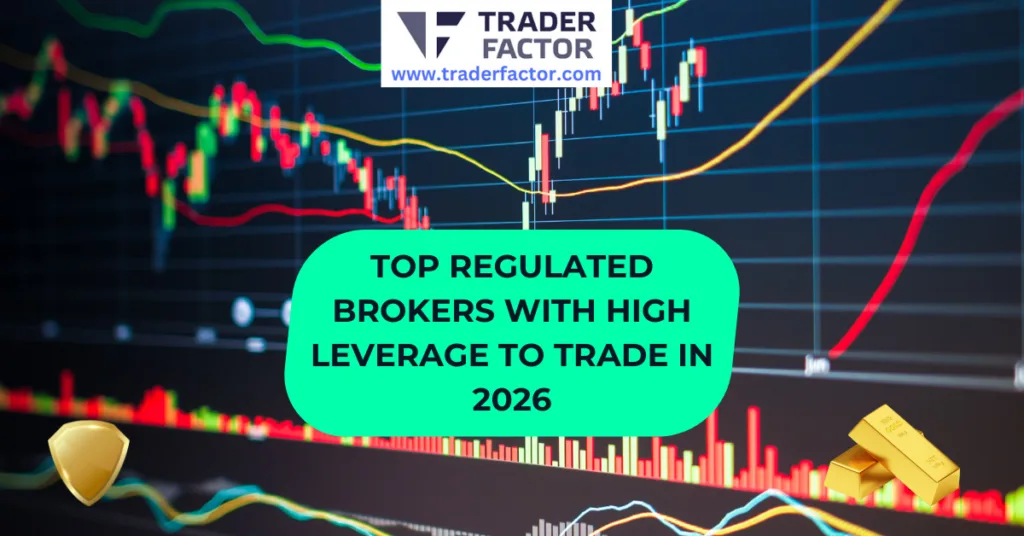
Practical Example: A trader might use a 200-day moving average to identify the long-term trend. If the price is consistently trading above the 200-day MA, the overall trend is considered bullish (upward). The trader would then look for buying opportunities, perhaps when the price pulls back to a shorter-term moving average or a support level.
Fundamental Analysis
Fundamental analysis focuses on economic, social, and political forces that drive supply and demand for a currency. This includes examining economic data like interest rates, inflation, GDP growth, and employment figures. For example, a central bank raising interest rates often strengthens its currency.
Trending Forex Terms in 2026
The Forex market keeps evolving—here are some hot terms every trader should know right now:
- Prop Firm (Proprietary Trading Firm) – Company that provides traders with its own capital to trade. Profits are split, but traders must pass challenges and show solid risk management to get funded.
- Liquidity Sweep (Stop Hunt) – Sharp price move designed to trigger clusters of stop orders. Big players hunt these obvious levels for liquidity before reversing price or fueling a trend.
- Algo Trading – Automated systems or bots that execute trades based on pre-set criteria. Popular for speed, precision, and removing emotion from trading.
- Copy Trading – Following and automatically replicating the trades of successful traders in real time. Allows new traders to piggyback on experienced pros.

- RegTech (Regulatory Technology) – Tech solutions that help brokers and traders stay compliant with ever-changing regulations.
- DeFi FX – Decentralized Finance platforms now offer currency exchange peer-to-peer, bypassing traditional intermediaries and brokers.
- Funding Rate – The cost paid between traders for holding positions, especially in leveraged derivative platforms.
- Virtual IB (Introducing Broker) – Digital-only partners who bring clients to brokers via online outreach and social platforms.
- Deep Liquidity Provider – Institutions that offer stable, large-scale currency liquidity to brokers—a must for tight spreads and smooth execution even in volatile markets.
- Flash Crash – Extremely rapid market drop followed by quick recovery, often caused by low liquidity or algorithmic trading gone wrong.
Stay on top of these terms to keep your edge as the landscape shifts.
The Forex market is always evolving. Here are some terms that have gained prominence.
Prop Firms (Proprietary Trading Firms)
Prop firms provide capital to traders, allowing them to trade larger accounts than they could on their own. In return, the firm takes a share of the profits. Traders typically must pass an evaluation or challenge to prove their profitability and risk management skills before getting funded.

Liquidity Sweeps
A liquidity sweep (or stop hunt) is a sharp price movement designed to trigger stop loss orders clustered around a key price level. Large institutional players may drive the price to these levels to “sweep” liquidity before moving the market in their intended direction. Retail traders who understand this phenomenon can avoid placing stops in obvious areas or even use these sweeps as entry opportunities.
Start Your Trading Journey – Forex Trading Terms
- Learn the lingo: Review these terms regularly—true mastery means you’ll recognize them in real trades and broker conversations.
- Practice smart: Use demo accounts to put theory into action with zero risk.
- Prioritize risk management: Start with low leverage, always set stop losses, and define risk before chasing rewards.
- Stay curious: The forex market is always evolving. Keep learning by following new trends and market news.
- Build your network: Connect with reputable brokers and trading communities. Trusted partnerships give you tools and support you need.

Ready to level up? Start trading in 2026 with trusted brokers and apply what you’ve learned for smarter, more confident trades.
Learning the language of Forex is the first and most critical step toward becoming a successful trader. With these terms as your foundation, you are better equipped to analyze the market, manage risk, and make informed decisions.
Ready to put your knowledge into practice? Start trading in 2026 with trusted brokers who can help you succeed.
Frequently Asked Questions (FAQ)

What is the Forex market?
The Forex (foreign exchange) market is a global, decentralized marketplace where the world’s currencies are traded. It’s the largest and most liquid financial market.
What is a rollover or swap?
A rollover (or swap) is the interest paid or earned for holding a position overnight. The amount is based on the interest rate difference between the two currencies in the pair.
What is an exotic currency pair?
An exotic pair includes one major currency and one from an emerging economy (e.g., USD/ZAR – U.S. Dollar/South African Rand). They are often more volatile and have wider spreads due to lower liquidity.
What is the best way to start learning Forex?
Start with a demo account. This allows you to practice with virtual money in a live market environment. Focus on mastering one currency pair and one strategy before risking real capital.
Disclaimer:
All information has been prepared by TraderFactor or partners. The information does not contain a record of TraderFactor or partner’s prices or an offer of or solicitation for a transaction in any financial instrument. No representation or warranty is given as to the accuracy or completeness of this information. Any material provided does not have regard to the specific investment objective and financial situation of any person who may read it. Past performance is not a reliable indicator of future performance.
FOLLOW US