

Also known as foreign exchange, forex trade is one of the largest markets in the world attracting both amateur and professional traders. This is because it increases your chances of having a long-term career and making good profits. While there’s a significant interest in forex, understanding the right steps can be tricky. For instance, you need to know how the fx market works and have an analytical mind. This article discusses step-by-step ways how to become a forex trader. It also shows the best practices and offers actionable advice for both experienced traders and beginners who wants to trading fulltime.
.png)
Forex Trading Education
One of the things that successful traders have in common is the curiosity to learn new things. If you intend to make good profits, you need to constantly learn about trading and the forex market.
Since forex is one of the most dynamic markets in the world, you must know what’s happening in the markets and what’s affecting them before you open an account. From online courses to books and educational websites, there are several ways to learn how to become a forex trader.
Online Courses
Forex online courses provide the best avenues of learning forex in college-based classes. The courses basically involve PowerPoint presentations, trading simulations, eBooks, and so on. Through these courses, you can move through beginner to intermediate and advanced levels depending on what the course offer. If you have limited knowledge about forex, these courses can be invaluable is you want to learn how to become a forex trader.
While most courses range from $50 to hundreds of dollars, you can access dozens of them online almost free of charge. A good online course should be developed with a successful trader’s knowledge, skills and experience and offered as part of the membership of the trading platform.
The course should also be self-paced and include webinars, videos, chat rooms, trading simulators and access to mentors. Once you know how to become a forex trader, you can start putting your knowledge into action through real trading.
Qualities of a Good Online Course
While looking for a good forex online course, you need to consider;
- The Reputation of the Course
With the increase in online trading, the supply of online trading courses has dramatically risen. There are many courses out there, but you’ll want to consider the reputation of the course. First, you need to avoid courses which promise instant or guaranteed returns without putting in an effort. A good forex online course should not make such promises.
Instead, choose a course that makes it clear that trading strategies take time to learn. Remember, forex trading involves risk-taking and there are no guarantees especially if you want to master how to become a forex trader.
- Certification for the Course
A good online course should be certified by a financial institution or regulatory body. If the course is universal, it should be certified by different international bodies. For instance, in the United States, the most popular bodies that certify online forex courses include;
- The Securities and Exchange Commission
- The Chicago Board of Trade
- The National Futures Association
- The Chicago Mercantile Exchange
- The Commodity Futures Trading Commission (CFTC
- The Financial Industry Regulatory Authority
- The National Futures Association
- Cost and Duration
Unlike live courses, online courses are quite flexible with most lessons based on pre-recorded lectures and video presentations. Before choosing a course, be sure to consider the cost and duration of the course. Since these elements vary depending on the provider, you need to narrow your options by checking the terms, conditions and even reviews from previous students to help you learn how to become a forex trader.
Books
If you want to master forex trade fast, reading books is one of your best options. With forex trading books, you’ll quickly learn the key points for effective trading. The best forex trade books will guide you throughout the journey right from the basics to becoming an expert. To quickly learn how to become a forex trader,you need to start practising what you learn as soon as possible.
Benefits of Forex Trading Books
- Mistakes to avoid– like every other job, you are bound to make a lot of mistakes as a beginner. But, with the right information from the books you can avoid this and start trading on the right footing.
- Knowing the myths– while most people give their opinions about forex, a lot of these are not true. Thankfully, with the best books, you can prove some of these myths and understand what’s true. Understanding the myths is very important if you want to know how to become a forex trader.
- Motivation– whether you are a beginner or a professional, motivation is extremely necessary. There comes a time when you don’t even feel like trading. This can be due to losses or some mistakes you made. Thankfully, the best forex books can motivate you to start from scratch.
- Money management– alongside forex trading strategies, it’s best if you learn how to manage your money. This might seem unnecessary at first but it will help you in the long run.
- Avoid scams- similar to any online investment, buying and selling in forex is full of scams. Several brokers might ask you to invest with them and scam you. Frauds are also common but you can avoid them by choosing books that explains how to become a forex trader.
- Boost your trading techniques– if you are already trading in forex, these books can help you learn the tricks and tips to step up your game. It’s, therefore, important to keep learning and get better insights.
- Know the risks– since forex trade requires investment, you should always expect risks. With the best forex trading books, you’ll not only learn how to become a forex trader but also know how to avoid risks.
- Making strategies– if you make strategies without planning you are likely to make mistakes. But with the best forex books, you’ll understand the financial market trends and strategise accordingly.
Educational Websites
Educational websites allow you to learn basic trading strategies, investment strategies and risk management. Once you’ve gathered enough information from the websites you can stay on top of economic news, foreign exchange market trends and global events. These websites will also help you boost your skills and learn how to become a forex trader so you can maximise your returns.
However, before settling on any particular website, you’ll want to make sure that they are trustworthy and legitimate. Whether you are looking for technical analysis, news or strategy guidance, it’s important to only pick reputable sites that can help you know how to become a forex trader.
The best websites should cover all the basics when it comes to learning about forex trading. As a rule of thumb, start with basic educational content before moving to foreign exchange market research and strategies. This way, you’ll understand the market and master the trading tools so you can make informed decisions.
Forex Trading Terminology
Forex has its own terminologies or language. When you are introduced to platforms such as MT4, and MT5, getting used to trading can be challenging. By not understanding such language, you can hinder your trading journey.
So, it’s important to familiarise yourself with some of the basic forex terminologies that can help you trade and master how to become a forex trader.. While there is plenty to learn, here are some of the core terms used in forex.
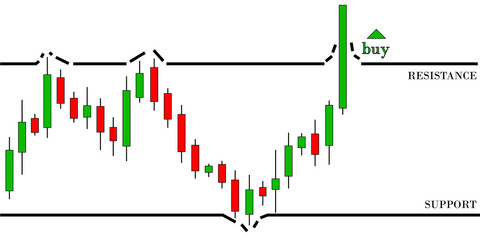
Pip
Known as the short form of Percentage in Point, a Pip is used to refer to profits and losses in forex. It represents the smallest increment that a forex exchange rate can have. Typically, one pip is equivalent to the fourth decimal of most currency pairs.
For example, if EUR/USD rises from 1.1558 to 1.1562, that rise is equal to 4 pips. However, there are currency pairs like yen-pairs whose pips are situated at the second decimal place.
Leverage
While the forex market is open 24 hours a day, the reason why traders are attracted is because of leverage. With leverage, traders can open a much larger position than their trading size. This allows them to get exposed to huge amounts of currency without paying the full value upfront. For instance, if you are given a leverage of 1:50, it means you can use your initial investment of $200 to open a trade valued at $10,000.
Margin
When using leverage, your broker can allocate a portion of your account size as the collateral for the trade. This collateral is known as the margin and it lets you keep some deposit in your account. For instance, if you trade on a 1% margin for every USD100 that you invest, you need to have a deposit of at least 1 dollar. This deposit, therefore, serves as a guarantee for the leveraged amount.
Spread
Spread refers to the transaction costs you have to pay each time you are entering a trade. While most brokers don’t charge any fees on placing trades, the spread remains the main cost to Forex traders. Knowing this is important if you want to master how to become a forex trader.
Exchange Rate
The exchange rate can be described as the price base currency compared to the counter-currency. If the exchange rate of EUR/USD is 1.15, then you need $1.15 to buy one euro. A high exchange rate means the price of the base currency is appreciating while that of the counter currency is depreciating.
Bid Price
This is the price at which a trader is willing to sell a currency pair. Conversely, the asking price is the price at which he is willing to buy the currency pair.
Stop Loss
This is a tool that allows you to close a position once you reach a certain pre-set price. By using this tool you can protect your trade against any further losses.
Forex Trading Tools
As a beginner, it’s important to invest in the best forex trading tools you can afford to sell and buy in forex smoothly. These tools are available for both windows and mac hence you can use them wherever you are. With these tools, you’ll not only trade well but also access the most reliable information possible.
Trading Platforms
Since today’s trading platforms include several technical analyses, they are termed as tools. On most trading platforms, there is news data which shows real-time prices and another window which allows you to directly trade off the displayed charts.
The best thing about trading platforms is that they have fully customizable dashboards that let you set your preferences and create watchlists. By using the software provided by these platforms, you can customize and even automate your trade according to the parameters you’ve set. Moreover, the fact that they come in mobile apps means you can always trade on the go and significantly increase your chances of success.
Charting Tools
As one of the most popular tools, charting tools allow you to get a visual representation of how the market is doing and even analyze the conditions in real time. Also, they let you place the trades directly from the charts and even customise them according to your pre-set parameters.
Moreover, they include additional features like trading signals and indicators which you can use to test your strategies and gain a clear view of how you could have performed in real-time trading. Unlike in the past, charting tools nowadays include interactive price charts with various overlays and technical indicators.
News Feeds
News feeds is also another important forex trading tool that can give you real-time data. While you can manually search the news from different sources such as Reuters, Bloomberg, Forex Factory and FX street, it’s much easier if it’s delivered automatically from central bank or other sources.
With a tool such as Admirals MetaTrader Supreme Edition plugin, you can have news feeds delivered directly to you. The fact that it connects all big news providers makes it one of the best forex trading tools out there. The best of all is that you can filter the news and receive only what you need.
Forex Trading Strategies
Forex trading strategies are designed to give you insights into when you can buy and sell in forex. Since not all trading strategies are equal, some may work while others may not depending on the particular trading situation. Also, trading strategies require different levels of fundamental and technical analysis for them to be effective. Depending on the trader, a strategy can be considered simple or complex.
Scalping
Scalping refers to taking advantage of small intraday price moves. A scalper seeks to quickly beat the spread with just a few pips before he can exit the market. Unlike others, this strategy uses low time-frame charts like the ones used in the MetaTrader 4 Supreme Edition package. Scalpers need to be able to make decisions fast even under pressure.
They should, therefore, spend a lot of time on the screen while focusing on one or more specific markets. The advantage of this strategy is that it allows you to focus for a specific time duration hence you don’t have to worry about interpreting long-term fundamentals or holding specific positions overnight.
Besides putting a lot of pressure on you, you are likely to react emotionally and make mistakes especially when your trade runs for only a few minutes. It may, therefore, not be the best trading style for beginners to first start with. Otherwise, this strategy only suits those who can dedicate and maintain focus during those rapid trades.
Swing Trading
Swing trading refers to when traders hold their positions open for several days. Some of the popular methods they use include range trading, trend following, and breakout trading. If you choose this strategy, you need to be patient as it might take several days for a good opportunity to show up. You might even hold up your trade for more than a week while making losses.

If you are comfortable with running positions for days, swing trading is the right strategy for you. It also allows you to use fundamental analysis something that scalp trading lacks. More so, it’s one of the key things taught in how to become a forex trader.
Carry Trading
Carry trading strategy is where you try to make a profit from the difference between the two different currencies. For example, you can buy a high-interest-rate currency and sell one with low interest. This way, you can receive an interest rate payment depending on the size of your position.
The advantage of this strategy is that you can earn a lot of profit from just holding a position. Of course, you need the right market environment for this to work. Carry trades tend to perform well in markets where traders are seeking high risk. However, before applying this strategy, you need to know the characteristics of the currency you’re buying. For example, a currency like the Australian Dollar will do well when the comedy prices are rising.
Forex Trading Plan
A trading plan is an organised trading approach that traders develop based on market analysis while factoring in any risks they’re likely to encounter. Traders who follow disciplined trading are likely to increase their profits. While they can lose some trades, they will still realize profits because they followed a disciplined approach.
Why You Need a Trading Plan
A good trading plan can help you make logical decisions so you can avoid being emotional at the heart of the moment. Other benefits include;
- Once you make an upfront plan, trading becomes easy.
- It allows you to make objective decisions and cut losses
- By sticking to your plan, you can know what works and what cannot work
- It gives you room for improvement as you can easily learn from your past mistakes
Setting Clear Goals
Any trading goal you set should be measurable, specific and attainable. For example, if you want to increase your portfolio by 15% your statement should be specific so you can measure success at the end of the time frame. Your goal should also be based on your attitude, and the amount of time you wish to commit.
Developing a Risk Management Strategy
Risk management strategies allow you to set rules that can minimize your trading losses. While this requires a lot of work and prior planning, it’s a must-have especially if want to ensure you make minimal losses while trading. Since foreign currencies are frequently fluctuating, you need to have a strategy that can cushion you and prevent you from making losses.
An effective risk management strategy should also reduce your losses and help you better manage any shifts in currency pairings much easier.
More so, a risk management strategy can help you diversify so you don’t just trade on one currency pair and risk making losses. But if you are using multiple currencies, you become less vulnerable to risks. The bottom line is to understand the risks so that you can know the best strategies to manage them. You can start with a demo account before moving to real trading.

Regularly Reviewing Performance
Forex trading requires you to regularly monitor your performance and overall position. A good way to do this is to keep a journal and record your reasons for trading, emotions during trade, goals and achievements. By keeping a journal or diary, you can maintain a clear focus and learn from your mistakes.
It’s also important to monitor your performance and keep a watch on your trading capital while bearing in mind that the main aim of trading is to preserve your capital. Furthermore, by reviewing your performance, you can look at your past trades and avoid making many more major mistakes in future. The important thing is to review your performance and learn from experience.
Conclusion
While succeeding in forex trade is far from easy, it’s nothing impossible. It’s a path full of challenges and pitfalls but the rewards are quite fulfilling. To succeed, you need to create a learning path by picking the right courses, books and websites.
You also need to master the strategies and develop a trading plan. If you are disciplined and have the right mindset, the possibilities of making profits are endless. Just remember to constantly be alert and adapt to the best strategies.

Frequently Asked Questions
How much time do I need to commit to trading forex every day?
The trading time typically ranges from one trader to the other. While some people start trading and keep monitoring the market, others enter the market, trade and come back later to review the position of their trade.
How long does it take to master forex trading?
This depends on how much time you dedicate each day to learning forex. Even if you’ve opened a trading account, it’s recommended that you continue learning. If you want to get started fast, it’s best if you set aside time each day for learning and researching.
Is forex trading safe?
Like any other online business, there are several scammers out there. However, this doesn’t mean there are no reputable brokers who are always ready to help you. So, it’s important to spend some time researching and reading everything about their websites. You should also check online user reviewers and gather as much information as possible about them.
Is forex trading right for me?
To enjoy forex trading, you need to have a strong mathematics ability and be strategic. You should also have problem-solving abilities and analytical skills.
How do I practice forex trading before going live?
Aside from developing your own styles and ideas, it’s best if you seek advice from professional traders while continuously reading forex trading books.
Read these next;
Forex for Beginners: What You Need to Know To Get Started
Best Trading Sessions At Forex Markets
Factors That Affect The Exchange Rate In 2023
Disclaimer:
All information has been prepared by TraderFactor or partners. The information does not contain a record of TraderFactor or partner’s prices or an offer of or solicitation for a transaction in any financial instrument. No representation or warranty is given as to the accuracy or completeness of this information. Any material provided does not have regard to the specific investment objective and financial situation of any person who may read it. Past performance is not a reliable indicator of future performance.
FOLLOW US


.png)


